The Legacy OS
Installing Systems That Build Connection
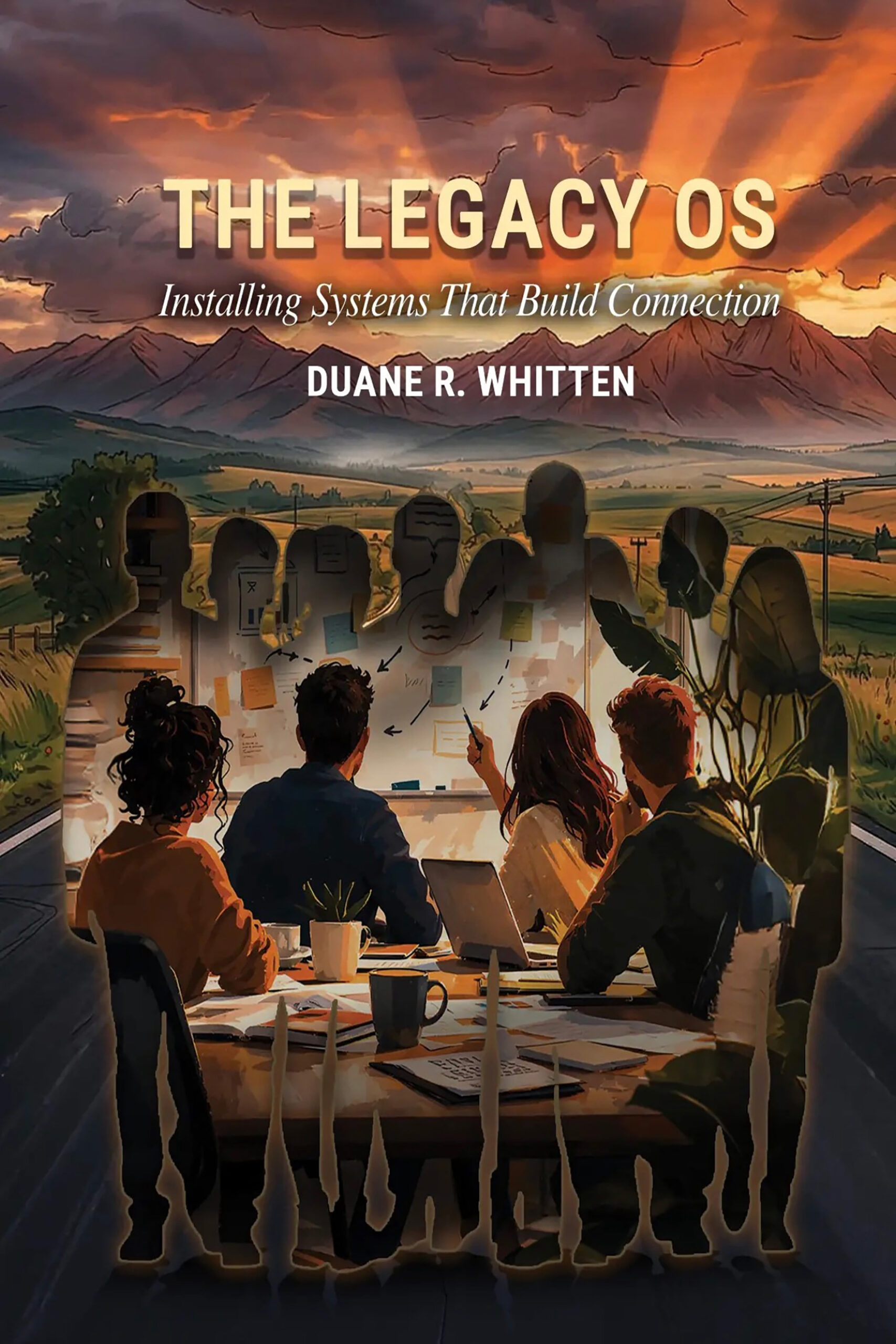
The Legacy OS moves beyond personal discipline and into shared architecture. It asks what happens when what works inside one person must begin working inside families, businesses, churches, teams, and communities.
This book teaches how to build environments that do not depend on one strong personality to survive. Through State, Roles, Proof, and Rhythm, The Legacy OS shows how connection becomes stable when it is supported by structure.
What readers are saying
4.6 average rating from 5 Amazon reader reviews highlighted here.
Paperback & Hardcover
Available exclusively on Amazon.

Read Digitally
Available on Amazon Kindle, Apple Books, Google Play, Kobo, and Barnes & Noble.

What works in you must work beyond you.
The Legacy OS teaches that personal strength is not enough if the system collapses when the strongest person steps away. Lasting connection requires shared architecture: defined roles, visible proof, steady rhythm, clear language, healthy ownership, and standards that can be repeated.
State
Every environment has a climate. Shared systems begin by stabilizing the emotional tone of the room.
Roles
Responsibility needs a name. Undefined roles create quiet chaos and hidden resentment.
Proof
Values do not last because people agree with them. They last when behavior makes them visible.
Rhythm
Stability is rarely dramatic. It is protected through repeated alignment, cadence, and review.
From personality, to architecture, to independence.
The Legacy OS moves through the full arc of shared system design. It begins by exposing the limits of personality-driven leadership, then builds the four pillars of shared architecture, installs them in real environments, trains new builders, and tests whether the system can stand without the founder at the center.
Name the Limit
Recognize why personality, inspiration, and good intentions cannot carry a legacy forever.
Define the Structure
Install State, Roles, Proof, and Rhythm so responsibility can become visible and repeatable.
Share the Language
Create common terms, non-negotiables, and ownership patterns before shared work expands.
Train Builders
Move beyond one strong center by developing people who can carry, repair, and teach the system.
Test Independence
The final proof of legacy is whether the structure can keep running when the founder steps back.
Explore the structure of The Legacy OS.
Each chapter teaches a layer of shared architecture: personality, inspiration, roles, generational transfer, State, Roles, Proof, Rhythm, ownership, non-negotiables, repetition, installation, training, and independence.
Why What Works in You Must Work Beyond You
The opening foundation for moving from personal strength into shared structure.
Personality Is Not a System
Strong people can build impressive things, but personality alone cannot protect a legacy.
Inspiration Does Not Scale
Motivation can wake people up, but it cannot replace architecture that repeats.
Undefined Roles Create Quiet Chaos
Confusion grows when responsibility has no name, owner, or clear boundary.
Why Most Legacies Die in the Second Generation
The next generation often inherits the fire without inheriting the furnace that held it.
State
Every shared environment has a climate, and that climate must be intentionally stabilized.
Roles
Roles distribute weight so pressure does not concentrate in one person or disappear into assumption.
Proof
Intentions do not stabilize environments. Behavior does.
Rhythm
Rhythm protects stability through repeated alignment instead of emotional spikes.
Shared Language Before Shared Work
People cannot stay aligned if they are using the same words to mean different things.
Naming Ownership Publicly
Ambiguity fades when ownership, decisions, and responsibility are named clearly.
Establishing Non-Negotiables
Standards must be defined intentionally before tolerance defines them accidentally.
Repetition Builds Trust
Installation is not a moment. It is a pattern people learn to believe because it repeats.
Installing in Business
A business matures when structure can hold more than the founder’s personal capacity.
Installing in Churches
Mission needs architecture so care, service, leadership, and correction can remain stable.
Installing in Families
Love is not architecture. Families need rhythms and roles that protect connection.
Installing in Communities
Community systems require voluntary alignment, shared language, and distributed responsibility.
Training Builders
If something is meant to last, one person cannot remain the center of it.
Removing the Founder
The founder must eventually step back so the system can prove it is truly architecture.
The Independence Test
The final question of legacy is simple: can it run without you?
Listen to The Legacy OS.
Experience the shared-system guide in audio and learn how State, Roles, Proof, and Rhythm can stabilize the people and places you care about.
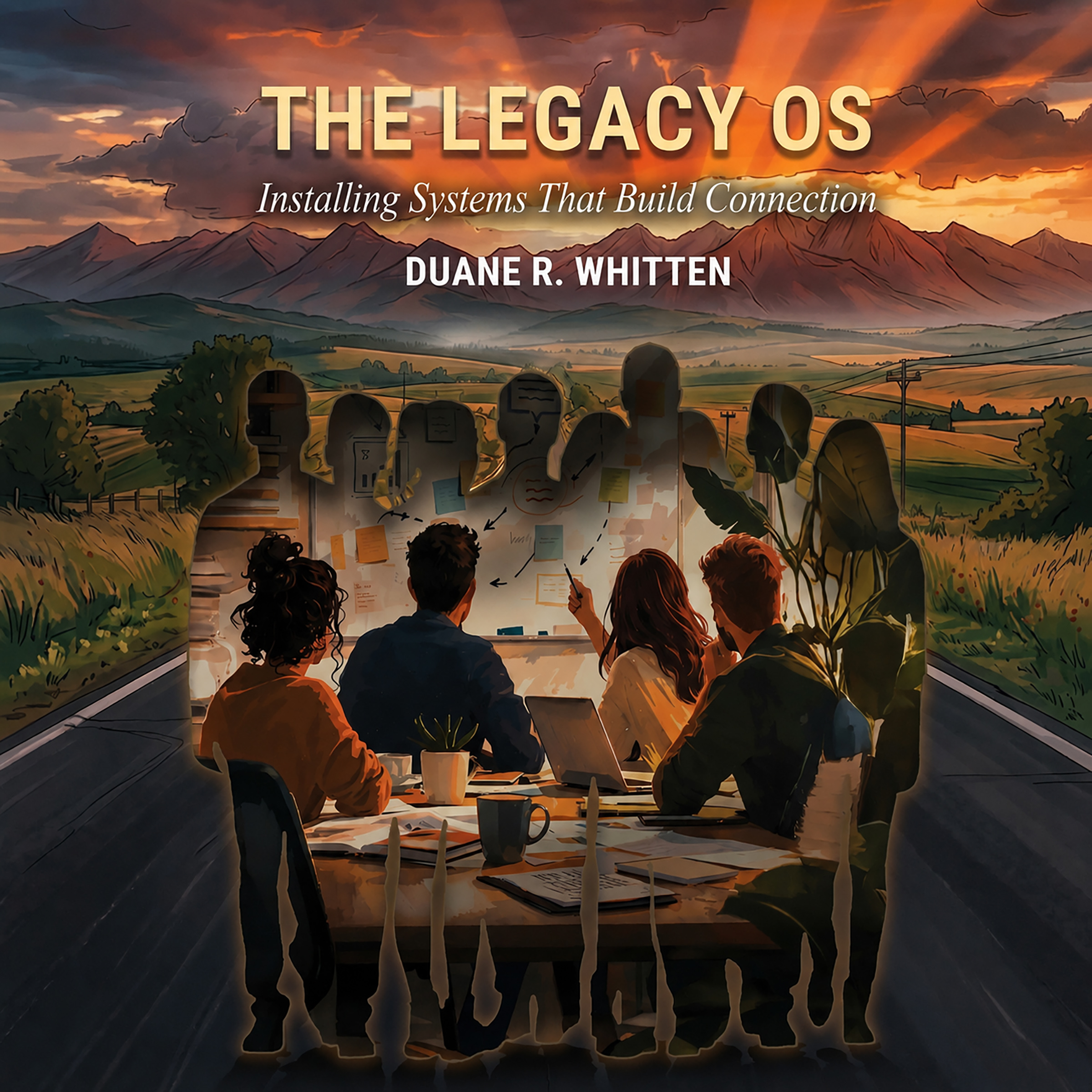
Listen as The Legacy OS moves beyond personal strength into shared architecture for businesses, churches, families, teams, and communities that need to last beyond one strong personality.



The Legacy OS teaches how strength becomes architecture beyond one person.
Study the framework for building shared systems that protect connection, distribute responsibility, repeat proof, and endure beyond the founder.